Dragon Food Chain and Preciousness Hierarchy Rule
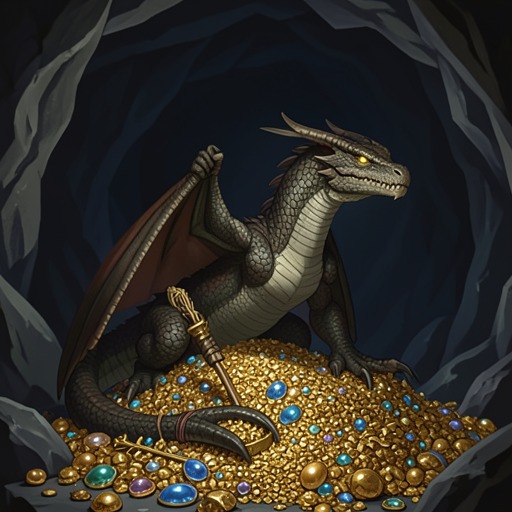
Vainqueur the DragonThe Dragon Food Chain and Preciousness Hierarchy Rule describes the order by which Vainqueur Knightsbane ranks creatures according to their preciousness, usefulness, and place within a dragon’s hoard. It is simultaneously a household protocol, a theory of social status, a reproductive preference, and a practical doctrine of consumption: those higher in the chain may eat those below them when necessary, while valuable minions are protected because their usefulness outweighs the immediate value of their bodies.
Definition and Hierarchy
The rule is most clearly articulated when Vainqueur Knightsbane explains Minion Protocol to Victor Dalton. The chief of staff occupies the highest level of the minion order and is described as the ultimate honor a monster lord can bestow: an enforcer expected to combine strength, cunning, and loyalty. Vainqueur then places Victor Dalton directly beneath himself in the preciousness hierarchy, even above princesses. The ranking therefore does not treat beauty or conventional aristocratic desirability as the sole measure of value. A minion’s office, reliability, and incorporation into the lord’s hoard can make that minion more precious than a politically or romantically prized captive.
Vainqueur’s description also makes preciousness inseparable from the food chain. Each member may consume those below them if hunger leaves no other option. Victor Dalton consequently learns that his exalted position does not make him entirely safe: as an honorary component of Vainqueur’s hoard, he is highly valued, but he remains a potential emergency ration if food and lesser minions disappear. Yellow’s eager declaration that feeding Vainqueur would be an honor exposes the system’s extremity. Loyalty does not abolish predation; it gives predation a ceremonial and hierarchical meaning.
Use in Minion Management
The rule shapes Vainqueur’s treatment of his servants in concrete ways. During a fight with Scorchers, he considers killing kobold minions for the items they might yield, then rejects the idea because good, loyal minions are too valuable to discard casually. Treacherous or thieving servants may be treated differently, but useful dependents are preserved as assets within the hoard. The distinction turns mercy into resource management: Vainqueur does not spare the kobolds because he recognizes an absolute right to life, but because their continued service has greater value than their loot.
The same logic burdens Victor Dalton with an expanding administrative role. As chief of staff, he must manage paperwork, develop Vainqueur’s class progression, train the Kobold Rangers, recruit additional servants, and find a profitable use for monster parts and corpses that were previously left for animals. The hierarchy elevates him, but elevation means labor. His status above ordinary minions is expressed less through comfort than through responsibility, while the corpses and discarded weapons around him reveal the material economy that the rule organizes.
The system also rewards successful protection and leadership. After Victor Dalton fearlessly leads monsters against superior opponents, he receives seven levels in the Monster Squire class together with major statistical increases and the Monster Lifeforce (Red Dragon), Monster Rider, and Monster Insight Perks. The reward translates service to a monster lord into measurable advancement, making the food chain part of the wider Class System rather than merely a joke about eating. At the same time, Victor Dalton’s Monster Squire class is identified as a monster class whose entry condition was fulfilled through his promotion by an intelligent monster. Rank within Vainqueur’s household thus changes Victor Dalton’s supernatural identity as well as his social position.
Reproduction, Wealth, and Preciousness
Vainqueur applies the hierarchy beyond military service. He advises Victor Dalton that a creature seeking reproduction should impress a prospective mate with the size of its hoard before asking to breed. Treasure signals fitness and protects future offspring from being raised by paupers. The advice treats wealth as both sexual display and parental qualification, extending the hoard’s logic into biology.
Yet Vainqueur distinguishes his own reproductive choices from those of short-lived creatures. He rejects the idea of reproducing with another dragon because additional dragons would create future competition for his hoard. In his view, creatures such as Victor Dalton’s kind must reproduce because they die frequently and risk extinction, whereas a dragon can preserve its position by avoiding rivals. The hierarchy therefore contains a species-based double standard: breeding is an urgent obligation for expendable beings but a strategic liability for an enduring hoard-owner.
Moral Limits and Contradictions
The rule’s language repeatedly collides with wider moral claims. Jolie states that sentient beings possess souls and that eating them or abducting their princesses is morally wrong. Vainqueur Knightsbane accepts an exception for elves while Victor Dalton points out that elves are people as well. This exchange shows that the food chain is not a consistent ethical theory. It is a selective boundary-making practice, distinguishing acceptable prey from protected or favored groups according to dragon custom, preference, and convenience.
The same contradiction appears in Vainqueur’s response to a fomor proposal to exterminate mortal races. He refuses, not because he grants all mortal beings an inviolable moral status, but because mortals are his favorite food and because their survival supplies coins and princesses. His objection is logistical and possessive: extermination would destroy the resources that sustain his hoard. The rule can therefore resist total annihilation while still preserving an exploitative worldview in which intelligent peoples are categorized as food, labor, treasure, or breeding stock.
Narrative and Systemic Significance
The Dragon Food Chain and Preciousness Hierarchy Rule satirizes the conversion of relationships into ranked assets. It makes friendship, employment, loyalty, beauty, wealth, and edible value commensurable within Vainqueur’s dragon-centered economy. Victor Dalton’s promotion is both an honor and a threat; the chief of staff is nearly part of the hoard, but that very incorporation leaves him within the category of things that can, under catastrophic conditions, be consumed.
The rule also helps explain the book’s recurring tension between monster civilization and predatory instinct. Vainqueur recruits a hundred kobold applicants and considers additional high-level monsters, including a troll, a dryad, and a golem, because a large and capable hierarchy strengthens his war effort and expands his resources. He can recognize the strategic value of varied subjects without abandoning the conviction that all creatures are inferior to him and may become emergency food. Civilization is consequently built not by escaping the food chain, but by administering it, rewarding service within it, and making its inequalities appear orderly.
Finally, the rule provides a counterpoint to the Class System’s numerical logic. Classes, levels, Perks, and the level-30 ceiling assign formal power through notifications and advancement, while Vainqueur’s hierarchy assigns value through appetite, loyalty, hoard membership, and rank. The two systems overlap when Victor Dalton’s service produces Monster Squire levels and Perks, but they are not identical. The game-like system measures capability; the dragon’s rule measures who may command, who must serve, who deserves protection, and who may be eaten when the hierarchy’s resources fail.